lunes, 4 de noviembre de 2013
Stereotypes Movie: "METALHEAD"
As we read a text about the stereotypes around punks, I found useful to share a movie related with Steryotypes. In is call "METALHEAD" and it deals with the social prejudices against heavy metal fans. The movie shows a very extreme case in Iceland, the homeland of some of the most extreme metal bands. I'll post the trailer here.

jueves, 17 de octubre de 2013
Personal Response: Surrogate mothers
“The Akanksha clinic is at the forefront of India’s booming trade in so-called reproductive tourism — foreigners coming to the country for infertility treatments such as in vitro fertilization. The clinic’s main draw, however, is its success using local women to have foreigners’ babies. Surrogacy costs about $12,000 in India, including all medical expenses and the surrogate’s fee. In the U.S., the same procedure can cost up to $70,000.”
 In the last years we've seen how technology has opened new areas to the human behavior, which, of course, are firmly related with ethics. One of them is Surrogacy, in which someone with fertility problems rents a woman's body to develop an embryo. At first we could think that this practice is totally okay, as the person is paying for a service and, moreover, he is encouraging the development of life. However, when a person decides to have a child is because he thinks he we'll have some benefits from it, like happiness, companionship or the sense of being part of a family. Although one could say this represents a fair cause, at the same time we have to see the child's experience. When someone decides to have a son or daughter by surrogacy, he is also determining the life of the child. The boy will not have a mother, or at least a "real" one. Moreover, he'll probably share the phenotype of his indian mother, which is not his father's, but the child will never meet her. The question here is, at what extent can we control our children's lives? Is it correct to conceive a love from money, and not from love?
The Indian women case is also very peculiar, as they are using their body to earn money, just like prostitution. While they get some money, women are also renting the most important part of their bodies, and taking personal advantage of the sacred ability to reproduce.
 In the last years we've seen how technology has opened new areas to the human behavior, which, of course, are firmly related with ethics. One of them is Surrogacy, in which someone with fertility problems rents a woman's body to develop an embryo. At first we could think that this practice is totally okay, as the person is paying for a service and, moreover, he is encouraging the development of life. However, when a person decides to have a child is because he thinks he we'll have some benefits from it, like happiness, companionship or the sense of being part of a family. Although one could say this represents a fair cause, at the same time we have to see the child's experience. When someone decides to have a son or daughter by surrogacy, he is also determining the life of the child. The boy will not have a mother, or at least a "real" one. Moreover, he'll probably share the phenotype of his indian mother, which is not his father's, but the child will never meet her. The question here is, at what extent can we control our children's lives? Is it correct to conceive a love from money, and not from love?
The Indian women case is also very peculiar, as they are using their body to earn money, just like prostitution. While they get some money, women are also renting the most important part of their bodies, and taking personal advantage of the sacred ability to reproduce.
viernes, 27 de septiembre de 2013
Individual Oral: Mobile Robots
1. Description of the robot in a wild situation.
2. The benefits of being able to travel independently or controlled remotely:
3. Reaching places dangerous for humans.
4. Going to very far sites.
5. Moving through hazardous or violent territories.
6. The wide variety of activities developed by these robots:
7. Space Exploration (NASA's Mars Exploration Rover)
8. Landmine Detection or Bombs Analysis (The Falkland Islands issue)
9. Assistance of disabled people
10. Conclusion: Extension of Human capabilities and the future of Mobile Robots.

sábado, 7 de septiembre de 2013
Solving a Problem: The Vaccinator 3000

lunes, 2 de septiembre de 2013
The Vaccinator 3000 Presentation
During this week, we'll have to present about our own-created robot. I'm working with Mr Barriga and Mr Oporto.

.jpg)
Here are some questions that will help to guide our planning:
What materials will it be made out of? Why?
It will be made of metal and the corresponding circuits to assure its functioning, because it's the easiest way to create and program a robot.
What materials will it be made out of? Why?
It will be made of metal and the corresponding circuits to assure its functioning, because it's the easiest way to create and program a robot.
How will the robot sense its surroundings?
It will have thermal sensors, to perceive if it's in front of a person or of an object. It will also be able to communicate, and "understand" (through a variety of computational programs).
It will have thermal sensors, to perceive if it's in front of a person or of an object. It will also be able to communicate, and "understand" (through a variety of computational programs).
How will it move and respond to the environment?
It will have wheels, to guarantee an easy movement through the room, where it will go from bed to bed, and from patient to patient, also helped by its thermal sensors.
It will have wheels, to guarantee an easy movement through the room, where it will go from bed to bed, and from patient to patient, also helped by its thermal sensors.
How or why is a robot better equipped to handle this challenge than a human?
A robot would be faster than a human, and also it would make doctors only occupate on other issues in which they might be more required.
What will the robot look like? Will it look human-like? Why or why not?
It will be the cheapest possible. Probably a "box" (cube) with an arm.
A robot would be faster than a human, and also it would make doctors only occupate on other issues in which they might be more required.
What will the robot look like? Will it look human-like? Why or why not?
It will be the cheapest possible. Probably a "box" (cube) with an arm.
How will the robot’s appearance influence how people interact with it?
At first people may be scared, but then they'll get used to it and it will be the same as being vaccinated by a person or a human-like robot.
At first people may be scared, but then they'll get used to it and it will be the same as being vaccinated by a person or a human-like robot.
sábado, 17 de agosto de 2013
Video: "Stem Cells Breakthrough" and "Stem Cells: Seeds of Hope?"
 Here are some questions related to the last two videos we watched about Stem Cells. In this post, I present my answers.
1) Why are stem cells considered so valuable for medical research?
This is because Stem Cells are flexible and can turn into any specialized cell, that's why they're called Pluripotent.
2) Why did the researchers have to narrow the spectrum of genes within stem cells? (video 1)
Because there are over 20 thousand genes, which were narrowed to 100, then 24 and finally only 4.
3) What are the sources of stem cells and the advantages and disadvantages associated with using each?
They can be taken from embryos, or can be produced from some specific cells taken from any cell. The advantages of stem cells are obvious, as they could eventually turn into any organ and help doctors cure almost every disease. However, their main drawback is related with ethics, as an embryo must be created to extract a specific organ, which means that doctors would "kill" the embryo (there is a similar problem with abortion)
4) What are the three cases presented at the beginning of the second video?
A hockey player with a problem in his spinal cord, a man with diabetes and two cousins that had a genetic brain problem (Tay Sachs disease)
5) How might a stem cell be used to treat spinal cord injuries?
They could replace the dead cells and build a bridge along the spinal cord by communicating with the closest cells.
 6) Explain the outcome of the experiment with injured rats presented in the second video?
The stem cells were placed in a section of the rat's spinal cord, and they turned into spinal cells by communicating with the nearby cells. However, the result was not completely perfect.
7) What issues surround the debate over of stem cell research?
The ethical problem related with embryos is the main issue, as in some methods a embryo is created and then it dies.
8) What issue do you think needs to be debated as we make decisions about stem cell research?
Just as with abortion, life should be respected. I think that healing diseases is something great, but it cannot go over other's life. I believe that killing an embryo to heal someone else is something selfish and it might generate deep problems in our society.
viernes, 9 de agosto de 2013
Video: Genetic Took Kit
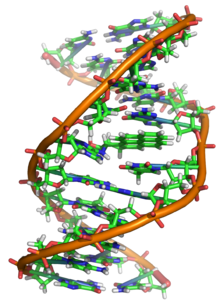 1) How has evolution tinkered with genes of animals?
Evolution can be considered to be all the new combinations of genes that are created, commonly triggered by the external changes (Climate, food availability, etc).
2) What role has embryos played in the study of evolution?
They are the developing animal, which shape and form is determined by the activated genes and the homeobox. This is the stage of development in which scientists focus their researches.
3) What did the experiment with fruit flies and mice show?
It showed that the homeobox or genetic tool kit could guide the growing process of any animal, as the genes come from common ancestors. This created a new view about the complexity of evolution.
4) What does the presence packages of information suggest about evolution?
It suggests that all animals have common genes, but their development is determined by the external factors and by the homeobox.
Genetic Tool Kit Video
Suscribirse a:
Entradas (Atom)