viernes, 9 de agosto de 2013

Video: Gene Control


As we keep learning about embryos and cells, today I present a set of questions related to Control Genes. 

1) Why did the German scientist decide to study the fruit flies at the larval stage?

She decided to investigate the flies in their early stage to analyse how they developed and how the mutations occurred.  Other researchers used to analyse fruit flies in their adult stage, but they couldn't understand how the genes worked nor how the mutation was produced.

2) How does the mother fly activate the control genes?

She leaves different chemical messages when she lays the eggs, and they determine the head and the tail of the growing fly and activate some gens inside the egg.

3) What is the role of control genes?

They switch on many other genes inside the cells, in order to specify their tasks. They control time and space, so the genes are activated at a determined region or organ in a specific moment of the growing process.

4) Which of the two species are closer to humans?

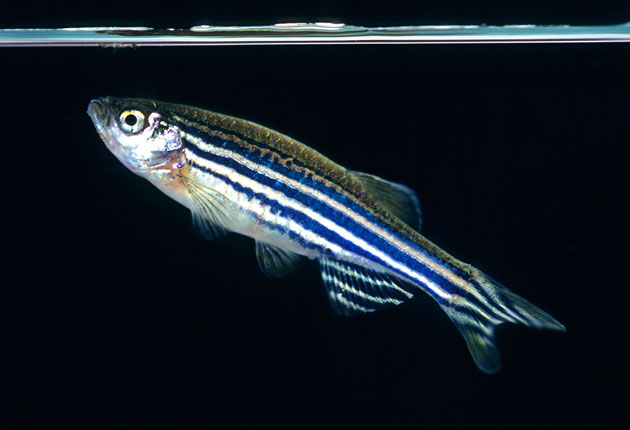
Zebrafish is closer. Their control genes and body plans are similar to the human beings'.  

Gene Control Video

jueves, 8 de agosto de 2013

The Development of the Embryo

As we are starting to explore a new area, the stem cells and the ethics around them, I'll answer some questions about the video "The Embryo takes shape" to have a better knowledge of this biological process.

1) What directs the sequence of events that turn a blob of cells into an embryo with specialized tissues and organs?
It's mainly determined by the genes and by the three layers created in gastrolation. The lower layer becomes the lungs, liver and digestive tract, the middle layer turns into the heart, muscles, bones and blood, while the top layers develops into the nervous system, skin and hair.

2) The narrator says that “cells talk to each other.” What does that mean?
It means that they can communicate to each other by chemical messages, which activate some specific gens in the nearby cells.

3) How do cells in different parts of the embryo become different kinds of cells and organs?
It depends on the ADN, the gens activated in each cell and the embryo layers explained in question 1.

4) What kinds of proteins are found in different cells and organs?
Collagen - Skin, tendons and bones.
Carrington - Hair.
Crystalline - Lens of the eyes.
Actin and myosin - Muscle fibers.
Hemoglobin - Carries oxygens from lungs to body.

5) What tells the cells which kinds of proteins to make?
The groups of genes activated in each cell.

6) What is the relationship between DNA, genes, and the proteins that are produced in cells?
They are all connected. The DNA is the genetical information in your cells, and genes are very small sections of these code. The genes, activated by molecules, determine which proteins are produced in each cell. Proteins are the molecules that build our bodies.

miércoles, 7 de agosto de 2013

Reflection on Biofuels + Peer Assessment

Last week, we studied the benefits and drawbacks of the implementation of biofuels in our world. It was great because we had the chance to understand the bad aspects of these sources of energy, which are usually seen as completely green and safe. During the week, we joined in pairs (I worked with Mr. Barriga) and presented about a topic. We focussed our work on the land consequences in the production of biofuels, which is mainly related with the production of food. I think we managed to perform pretty well and explained our subtopic to our class in a good way. In general, I think the presentations were all good and also, they were a great way to understand the problems and benefits of biofuels in a better way, as each group faced the topic from a different aspect or view.

If some asked me how would I evaluate my partners work, I think all the peers did a good job. Some topics were more difficult, specially the one about the production process, but Mr Nuñez and Mr Ugarte managed to present it in a good way (Maybe they could have spoken a little louder). Mr Oporto and Mr Gastó presented about the Economical Effects, contrasting the comercial benefits of biofuels and their impact in food prices. 

miércoles, 31 de julio de 2013

What is the effect of producing biofuels on land used for food or cattle?

Biofuel production has increased in recent years. Some commodities like maize (corn), sugar cane or vegetable oil can be used either as food, feed, or to make biofuels. For example, since 2006, a portion of land that was also formerly used to grow other crops in the United States is now used to grow corn for biofuels, and a larger share of corn is destined to ethanol production, reaching 25% in 2007.

A recent study for the International Centre for Trade and Sustainable Development shows that market-driven expansion of ethanol in the US increased maize prices by 21 percent in 2009, in comparison with what prices would have been had ethanol production been frozen at 2004 levels.

Second generation biofuels could hence potentially combine farming for food and fuel and moreover, electricity could be generated simultaneously, which could be beneficial for developing countries and rural areas in developed countries. With global demand for biofuels on the increase due to the oil price increases taking place since 2003 and the desire to reduce oil dependency as well as reduce GHG emissions from transportation, there is also fear of the potential destruction of natural habitats by being converted into farmland.In February 2010 Lapola estimated that planned expansion of Brazilian sugarcane and soybean biofuel plantations through 2020 would replace rangeland, with small direct land-use impact on carbon emissions. However, the expansion of the rangeland frontier into Amazonian forests, driven by cattle ranching would indirectly offset the savings. "Sugarcane ethanol and soybean biodiesel each contribute to nearly half of the projected indirect deforestation of 121,970 km2 by 2020, creating a carbon debt that would take about 250 years to be repaid....

However, a 2010 study also by the World Bank concluded that their previous study may have overestimated the contribution of biofuel production, as "the effect of biofuels on food prices has not been as large as originally thought, but that the use of commodities by financial investors (the so-called "financialisation of commodities") may have been partly responsible for the 2007/08 spike." A 2008 independent study by OECD also found that the impact of biofuels on food prices are much smaller.

Biofuels are the best way of reducing our emissions of carbon dioxide and other greenhouse gases responsible for global climate change. As with fossil fuels, burning biodiesel or ethanol to drive an engine or generate electricity releases carbon into the atmosphere. Unlike with fossil fuels, however, growing the plants from which biofuels are made takes carbon from the air, so overall the process is carbon neutral. This means policies to increase the use of biofuels could greatly reduce overall levels of carbon emissions, and so be a major part of tackling global climate change. Since the international community has made reducing climate change a priority, with different climate conferences like Copenhagen, seeking energy alternatives should be at the forefront of their efforts. Biofuels can also help improve local air quality as mixing ethanol with fossil fuels helps meet clean air standards, and overall be one of the tools used to reduce carbon emissions into the atmosphere.

Extra-Material:


Biofuels seemed to be the solution to the environment issues. However, now we can see that some studies have stated that they aren't that good, as they may increase food prices and can eventually contaminate as much as petrol. On the other side, they are considered to be the solution as they are supposed to be eco-friendly and can clean the air, as well as they reduce the petrol price. Unfortunately, it is hard to decide which position is correct as there are no official researches about the real effect of biofuels in land and food production. Moreover, it will be very hard to do such investigation as many other factors influence the food price, apart from the land availability.


Finally, I think we could reflex about something. Do you think that the control of the food prices is more important than the preservation of the environment, considering that food is actually enough for the world's population if it's correctly distributed? In other words, is it acceptable that a human-creation (Prices) prevent the correct distribution of food, forcing us to contaminate more in order to allow this distribution to be done? Aren't we, as humanity, suffering a self-made and virtual problem?


jueves, 20 de junio de 2013

The Kite Runner Questions (Chapters 11-25)

1. Chapter 11 has a new setting. What is it?
Fremont, California, the United States.

2.  “America was different. America was a river roaring along, unmindful of the
past. I could wade into this river, let my sins drown to the bottom, let the
waters carry me someplace far.” This quote from Chapter 11 is said by whom?
What does it reveal? What does this metaphor mean?
It was said by Amir, two years since they arrived to USA. It shows that America seems to be the new country, were Amir can be free of all the problems that were taking place in Kabul. It can also be considered as a reborn for Amir, in which he can forget his sins (Hassan's rape, maybe).

3. What does Baba give Amir as a graduation present? What is Amir feeling at this
moment? What is Baba feeling?
The gift was a Ford Gran Torino. He felt very excited and happy about the kindness that Baba showed, because he knew how hard was to get a car.

4. What does Amir tell his father he wants to study in college? What is Baba’s
reaction?
He says he wants to be a writer. Baba, in some way, accepted it and felt that he was going to be a very good writer (At least, he tells so to General Taheri). However, Baba didn't feel happy for it and he thought his degree would be wasted. 

5. Baba observes that “It may be unfair, but what happens in a single day can
change the course of a whole lifetime.” Whom is he speaking about? Why?
What else might be significant about that quote?
He is speaking to Amir about the General's daughter, as Amir asked about the stories floating around her. It means that one action at one moment can change the whole future of a person.

7. In 1989, what is going on in Afghanistan? Who are the Mujahedin? Who is in
charge?
In 1989, the Shorawi or Soviets left Afghanistan. The Mujahedin are that afghan muslins that are fighting against the soviert-puppet government of Najubullah.

8. Chapter 14 brings us back to the opening of the book: the telephone call from
Rahim Khan. What is Rahim asking Amir to do?
Amir has to go to Pakistan because Rahim Khan is very sick. He also says that there's something pending in his life. 

10. Who is Farzana? Sohrab?
Farzana is Hassan's wife, while Sohrab is their only son.

12. In Chapter 17, Rahim gives Amir a letter from Hassan, who wrote it six months
before. What is the tone of this letter? How does Amir react?
The tone in the letter is quite sad and negative. Although Hassan explains that the situation in Kabul is horrible, he also seems to be happier when he refers to his son Sohrab. In fact, he would like Amir to meet him. Also, Hassan is preccupied  by Rahim's health.

13. In Chapter 18, Amir finds out that both Hassan and his wife were shot by the
Taliban trying to protect Baba’s house, orphaning their son. Rahim tells Amir
it is his job to find Sohrab in Karteh-Seh, Afghanistan, and take him to an
orphanage in Peshawar, Pakistan. What is Amir’s reaction? Do you think
Rahim’s dying wish is unfair? Why or why not?
At first, Amir didn't want to go, probably because he had a comfortable life in America. Then he started to feel the responsibility (Maybe for the rape?). Rahim asked this as his last wish, as he would die soon. I think he is just being honest and that he want to end his life in peace, contributing to save Sohrab. After that, Rahim told him about his brotherhood with Hassan. At that moment, Amir broke and he rushed out of the apartment ("I'm thirty-eight years old and I've just found out my whole life is one big fucking lie!").

14. In Chapter 19, Farid is engaged to drive Amir from Peshawar to Afghanistan.
Describe his first impression of Amir. When Farid said, “You’ve always been a
tourist here, you just didn’t know it,” (p. 232), what did he mean? What is
Farid’s impression of emigrant Afghans who return to visit Afghanistan?
Farid gave him a dismissive look. The quote could mean that Amir never got into Afhganistan reality, as he was from a wealthy family. He also seems to think that returning afghans are coward people who escaped with the money they had and didn't had the courage to defend the country.

15. In Chapter 20, the director of the orphanage, Zaman, tells Amir that Sohrab
was taken by a Taliban official, who takes children, usually girls, about once a
month, for his “sexual pleasure.” The official gives Zaman a great deal of cash.
How does Zaman defend his actions?
He says that he gives out one child to pay for the food and necesities of all the others. He has a reasonable point, as he doesn't have any money to pay for those children's needs.

16. What is your reaction to Rahim Khan’s letter to Amir? Should the letter have
been presented to him earlier? Do you feel that Baba was a good man?
After reading the letter, I still think Baba was a good man. Living with a hided son and trying to keep the social view of the family was very hard for him, and he did a lot of social actions to be considered good.  Also, we get to know that Rahim knew what happened to Hassan and he understood it, although he thought Amir acted in the incorrect way.

18. Chapter 25 resolves the action with Sohrab and Amir returning to San Francisco.
Describe Sohrab for the first seven months he is in San Francisco.
He was calm and pretty sad, he doesn't speak much. He didn't seem to be happy at all, maybe he felt he betrayed his friends from the orphanage.

19. What happens as Amir runs the kite for Sohrab?
He shouts "For you, a thousand times over", the same phrase that Hassan said many years before. It gives a perfect end to the story, connecting it with Hassan's duty in the kite tournaments.

20. How is this another full circle?
It is very special, because in the 70s Hassan runned kites for Amir. Now, 30 years later, Amir runs a kite for Hassan's son. Maybe, it could be considered as the final redemption of Amir towards Hassan, as he always felt guilty for what happened with Assef.

martes, 18 de junio de 2013

Europe Trip 2013

Next friday, we are leaving to Europe! We'll be there for about 20 days, and we'll visit Scotland, England, France and Italy. Luckily, I'll also stay with my family to visit Germany, as some of my ancestors were born there. I hope we'll have a great time and many experiences that I'll surely share in this blog. Here is the countdown!

jueves, 13 de junio de 2013

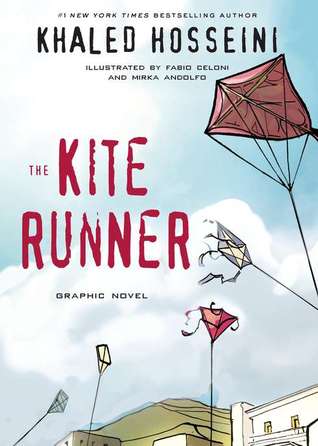
The Kite Runner Graphic Novel Analysis

Last class, I had to present about a specific page of the Graphic Novel inspired in The Kite Runner, by Khaled Hosseini. I spoke about page 98 supported by a Power Point, which I link in this post. I think this was a great activity because we had the chance to learn about the novel by using a completely different text format, a comic.

PPT