domingo, 24 de marzo de 2013

Reflexing on Advertisement

“Advertising is everywhere you look, whether it is in the newspaper you pick up daily or on that billboard you see while driving down the highway. Some people may say that they are not in fact influenced by the advertising that is thrown at them each day, and that they do not fall into it, but everyone does.”
Advertisements are something that we cannot avoid, because they are wherever we look. In fact, they are part of our lives and in some way the keep us updated and connected. I think Advertisements are awesome, because they show us all the options available. If you want to buy a TV you're not forced to buy one because you know there are many different models and brands in the market. Nevertheless, Ads can also be confusing and can trick us, so we have to be aware of the products offered to us. If we know how to interpret Ads, we'll rarely have any problems. 

Going deeper, I want to refer to the main point of Ads: Showing us a new product. But, who is behind that? Who says what the new fashion will be or how are the new mobile phones going to be? The only answer for that is Major Brands and Big Companies. They want us to follow their guide, and it's not rare that fashion, for example, changes every year... and there are the blind persons who follow and buy new clothes every year. I think we have to be balanced and not agree with everything we are shown. If the Ads say that skinny pants are "cool" and you don't like them, well, don't buy them! I think self confidence is crucial to follow our own way of living and not accepting everything the system shows us.

viernes, 15 de marzo de 2013

Analysing an Ad


I found this advertisement video very interesting because it offers a product in a special way. Domino's Pizza introduced their all new "Pizza Box Office" service into the UK market by bringing a military-related scene to a common pizza delivery, set in a regular neighborhood. The Ad shows how a pizza is delivered by a group of soldiers dressed with special vests and helmets, which relates the delivery to the new movie service that Domino's Pizza offers. In the Ad, we can also see that the customer that receives the pizza is surprised by the way his pizza was brought home, as he expected a common pizza guy. This ad takes advantage of the natural relation between pizzas and movies, and that's why it must be oriented to people who like to enjoy a movie while eating some pizza at home. 

To contribute to the atmosphere, the ad includes helicopters and guns, which create a military theme. The commercial also includes sounds related to war so that the Ad seems to be a real movie, and only at the end it's revealed that it's not actually a war but a pizza delivery. Another technique used is the close up to the soldiers to offer a movie-like recording. It's also important to note that the ad includes very little text, as the military-scene takes all the attention. This advertisement seems to be very eye-catching, although it doesn't include any special celebrities. Also, I believe the message behind the scenes is that now you can watch movies in a much more enjoyable, easy and fascinating way with the new Pizza Box Office service. 

martes, 4 de diciembre de 2012

The King without a Kingdom.

Once upon a time there was a king without a kingdom. He traveled to far lands and across the seas, but he couldn't find a kingdom. In one of his adventures, he met a gorgeous queen, and he inmediately fell in love. Unfortunately, the queen didn't seem to like him, so the king decided to prove her he was a brave man.
The kings went to England nad asked Merlin how could he prove his manhood. Merlin told him to go to the woods and kill a Blue Dragon, take his eye and present it to the Gods of the Olympus. After doing this, the Gods will intervene and the Queen will love him.
The king rushed to the woods. He found a firendly elf who told him that Blue Dragons came out from their vaces at night, and that he could find them at the fairy pit. The elf rapidly disappeared and the king started searchng for the fairy pit. He walked through the trees following a path of glowing blue flowers. After some time, the flower's path disappeared. The king felt lost, but he inmediately climbed up a tree. From the top, he could see the magnifisent fairy pit at some distance. The pit was a big circle made of colourful glowing flowers, with a huge round rock in the middle. the king waited in the tree to be safe of the coming dragons. as the night fell, he saw how a tremendous and scary dragon entered the pit. it was a blue dragon. at that momenmt, a group of fairies approached him and picked him up. the king was taken to the fairy pit.
the brave king took his great sword and prepared for the battle. the dragon attacked him with his fire breath, but the king managed to avoid it and ran towards the dragon. The king jumped andstabbed the dragon in the neck. The dragon screamed for hisdeath and the king proceded to take its eye. Once he did this, the kingwalked to the middle of the pit and got on his knees. raising the eye towards the sky. The night was interrupted by thunders and the king knew the Gods had accepted his offerings.
The king went out of the wood and to the queen's castle. He entered and she was waiting for him. They decided to marry and have a happy life together. Finally, the king had a kingdom.

jueves, 15 de noviembre de 2012

Fatelessness Trailer!

This week, I worked with Mr Barriga and Mr Gré and we produced a home-made trailer for the book "Fatelessness". I hope you like it!


lunes, 29 de octubre de 2012

Written Task 1: "A Vision of Budapest"

A Vision of Budapest
Józef Kossuth 
05/07/1944

Last month, our country was violently invaded by the Nazi Germany. The secret treatments between Hungary, the United States and Great Britain were discovered by Germany, which meant that the germans decided to end the relationship with Hungary and take control of it. We, the hungarian population, must be informed of the tough situation our country is going through. As our prime minister, Miklós Kállay said, things will never be the same in our country. The normal development of Hungary, specially Budapest, has been interrupted by the international problems that collided in the war, and we have to be aware of the changes it will create in our nation. To help people acknowledge how our country is changing, I'll state the main shifts that are taking place.

I. The first influence of the Nazi Regime in Hungary were the yellow stars that must be worn by every single jew in the country. This means that the jewish community is now separated from the rest of society (Let's consider this as an ideological division, not an actual physical one). In addition, the shortage of products caused by the war is now affecting jews the most, as the yellow star determines what someone can buy and can not buy. As for the last month, these restrictions have forced the organization of a huge black market in Budapest. Unfortunately, this way of getting products lacks of hygiene and it increases the diseases and health problems.

II. In the last month, we've also witnessed how little boys have been obliged to leave schools and start working at factories or industries to support war. Mainly jews, these boys are giving their education for the economical welfare of the Nazi Germany. In addition to the long hours of labour, this political measure is also separating Jewish families even more than before. The persecution against the Jewish community is now open and cruel.

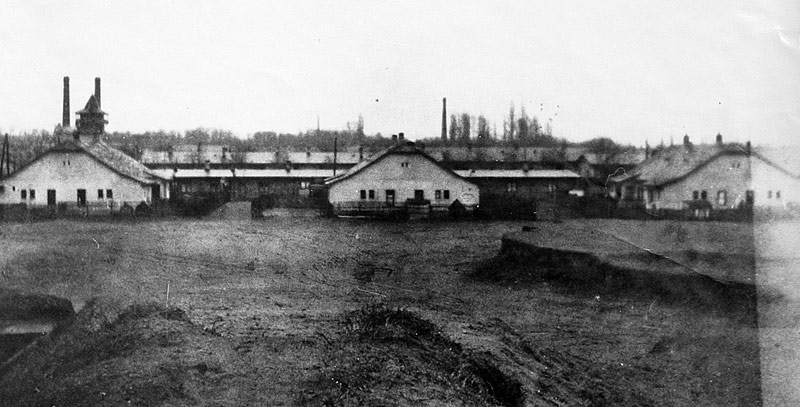
III. The third change we've seen is the construction of Labor Camps in Hungary, following the model implemented in Germany some years ago. Not only jews, but gypsies and homosexuals have been taken to the Labor Camps to work. As for now, most of the workers are adult men. This means that many families all over the country have lost their leader and main economical support. The actual situation inside Labor Camps is rather unknown, because no one has come back from them yet, nor we the journalists have'd access to one of them. The general hope among the Jewish Community is that women are kept away from these camps.

In relation to the third point, last week I had the chance to see how immense groups of Jewish boys were taken from the factories they worked in to the grey Labor Camps. In this environment, I managed to run towards one of the groups to know more about the Nazis' objective. As one might have expected, all the boys wore a yellow star either in their jacket or in their arm. Also, some of them were holding ID cards in their hands. As I investigated a bit, I got to know that the ID cards allow the boys to go through the country to the factories they worked in, but they didn't operate any more. 

IV. Another result of the Nazi Invasion is the direct introduction of Hungary in what is starting to be called as the Second World War. This means that the air raids will increase in Budapest, as our capital city is now one of the targets of the United States, Great Britain, the Soviet Union and all their allies. For this reason, the Budapest population will have to be aware of the attacks and the bombs that will fall over the city. Expecting this problem to happen, the national authorities have recommended the hungarian population to hide in safe places, specially in the Subway. In addition, we also have to consider that several hungarian soldiers are now going to war and many of them will cruelly die. 

Regarding the Jewish community, they are scared and hoping for a better future. They are witnessing how their families are being separated and destroyed. In the same mood, we've to remember that gypsies, homosexuals and other minor groups are suffering just as the jews. We've to acknowledge the problems and changes stated above, because they might be just the beginning of a long and tough period of Nazi domination over Hungary. Soon, these problems will not only affect the jews, but they'll cause troubles to all the hungarians. However, it's sad to realize that there is nothing the inhabitants of our country can do to solve these problems; we can just wait and hope for the best. Finally, we have to be informed and know that this war could end up by the obliteration of our country, and perhaps, the world.


Rationale


For my written task, I thought a News Report would be the best option, because I wanted to show the setting of Fatelessness, and the Report's structure fulfilled my needs. Although the story itself offered me lots of options, I think that refering to the story setting was a wise choice. The report includes some historical facts to give it more credibility, as well as some details from Imre Kertész’s book, such as the ID cards, which create a strong relation between the report and the problems Georg Koves is going through.

Regarding the author, he is supposed to be a journalist who is witnessing what’s going on in Hungary, that's why the report was supposedly published in 1944. The narrator tells the facts in a non-jew Hungarian point of view, by using a negative tone. I decided to include words like “cruel”, “suffering”, “tough” and “obliteration” to show a pesimism and a cold view of Hungary’s reality. During the whole report, the reader receives a feeling of a problematic and hopelessness situation, which is the true intention of the report, due to the chaos and sadness that the war provocated in Europe in those times. Finally, it's important to highlight that when you reads the report it seems that the problems stated are just happening now, which I think is great.


domingo, 28 de octubre de 2012

Literature: Important Terms and Concepts!

When an author writes a piece, he will often use special devices that help him express himself. Before I go straightly into the Literary Terms, I want to make the difference between Mood and Tone.


  • Mood: It's the general atmosphere created by the author's words. It can also be understood as the feelings the reader gets when he reads the piece. (Melancholy, sorrowful, sentimental and sad are just some examples)
  • Tone: It's the attitude of the author towards the writing. The Tone can change from situation to situation, and there can be more than one tone at a time. However, one will predominate. (Optimistic, informal, serious and positive are some good examples) 
Literary Terms:

1. Allegory: story or poem in which the characters, setting, and events stand for other people or events or for abstract ideas or qualities. Can be read for a literal meaning and on a second, symbolic meaning.


2. Alliteration: repetition of the same sound in a sequence of words, usually at the beginning of a word.

3. Allusion: a brief reference to a person,place, thing, event, or idea in history or literature
Wondering if a woman was beautiful enough to “launch a thousand ships” would be an allusion to Helen of Troy in the Odyssey. Also, “Old Scratch” in American literature refers to the Devil.

4. Climax: The point in the plot that creates the greatest intensity, suspense, or interest. After this point, nothing can remain the same; greatest turning point in the story.
The climax in THE SCARLET LETTER is when Dimmesdale finally confesses his sins to the crowd

5. Connotation: Associations and implications that go beyond the written word
“Eagle” connotes liberty and freedom that have little to do with the word’s literal meaning of describing a bird. In PUDD’NHEAD WILSON, David Wilson is called a “pudd’nhead to connote his foolishness..

6. Denotation: dictionary definition of a word
“buying a ranch” denotes purchasing land on which to raise crops and livestock

7. Flashback: scene that interrupts the normal chronological flow of events in a story to depict something that happened at an earlier time
When Hester remembers her early life with her family and her honeymoon with Chillingworth, it is a flashback.

8. Foreshadowing: use of hints and clues to suggest what will happen later in the story, often used to build suspense or tension in a story
Pudd’nhead’s repeated fingerprinting of Tom and Chambers foreshadows its later importance in the book.

9. Gothic: use of primitive, medieval, or mysterious elements in literature. Gothic writing often features dark and gloomy places and horrifying, supernatural events
Edgar Allan Poe’s “Fall of the House of Usher” is a gothic story featuring a large, dark, gothic mansion.

10. Hero: a character whose actions are inspiring or noble. Tragic heroes are noble and inspiring but have a fault or make a mistake which leads to their downfall.
Some critics claim that Dimmesdale in TSL is a tragic hero who falls is society due to poor decisions.

11. Hyperbole: boldy exaggerated statement that adds emphasis without intending to be literally true.

12. Lyric poem: a melodic poem which describe an object or emotion.
“Heart, we will forget him” describes a woman trying to recover from heartbreak

13. Metaphor: a lterary device in which a direct comparison is made between two things essentially unlike

14. Narrative poem: a narrative poem tells a story in verse.

15. Onomatopoeia: use of words that imitate sounds.

16. Personification: a literary device in which human attributes are given to a non-human such as an animal, object, or concept

17. Plot: sequence of events in a story, usually involves characters and a conflict.

18. Point of view: the perspective or vantage point from which a story or poem is told. Three common points of view include: first-person, omniscient, and third person limited.

19. Setting: the time and place of the story or poem’s action, it helps to create the mood of the story

20. Simile: a literary device in which a direct comparison is made between two things essentially unlike using the words “like” or “as.”

21. Soliloquy: A long speech made by a character who is onstage alone and who reveals his/her private thoughts and feelings to the audience.
Romeo, as he is about to kill himself in ROMEO AND JULIET speaks to the audience.

22. Stanza: a group of lines in a poem that are considered to be a unit. They function like paragraphs do in prose writing.
The whiskey on your breath
Could make a small boy dizzy;
But I hung on like death:
Such waltzing was not easy

23. Symbol: something that means more than what it is; an object, person, situation, or action that in addition to its literal meaning suggests other meanings as well.
The Liberty Bell is not only a bell but a symbol of freedom in the United States. Hester’s scarlet letter symbolized her sin of adultery.

24. Theme: an insight about human life that is revealed in a literary work
One of the themes if PUDD’NHEAD WILSON is that everyone suffers in some way in a society that condones slavery.

25. Thesis: the organizing thought of an entire essay or piece of writing and which contains a subject and an opinion
“Of the three scaffold scenes in TSL, the third one best encapsulates the theme that self-punishment is the harshest outcome of sin.”

26. Tone: the writer’s attitude toward the story, poem, characters, or audience. A writer’s tone may be formal or informal, friendly or anxious, personal, or arrogant, for example
“Hooray! I’m going to get married today!” (ecstatic tone)

27. Understatement/litote: literary device that says less than intended. Oppositive of hyperbole. Usually has an ironic effect, and sometimes may be used for comic purposes.